Arbor Garden Centre & Nursery native ontario plants
Serviceberry tree
Black Elderberry Tree
Black Elderberry Tree
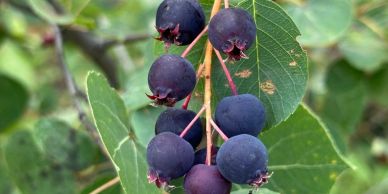
Discover the versatile and resilient serviceberry (Amelanchier spp.), a stunning woody plant that thrives across USDA Zones 2 to 9. Growing as a 6 to 25-foot tree or shrub, it flourishes in well-drained, slightly acidic to neutral soils under full sun to partial shade. Its delicate white spring blossoms attract native bees, butterflies, and other vital pollinators, while yielding juicy, dark purple fruits with a sweet, agreeable, and rich blueberry-like flavor. Beyond its delicious harvest and brilliant fall foliage, this plant is an ecological powerhouse that provides essential food and shelter for over 35 species of songbirds and wildlife.
💮 Delicate white flowers in May
🫐 Fruit in June
🌤️ Full sun to partial shade
💧 Moist, well-drained loamy soil; pH 5.5 - 7.0.
Black Elderberry Tree
Black Elderberry Tree
Black Elderberry Tree
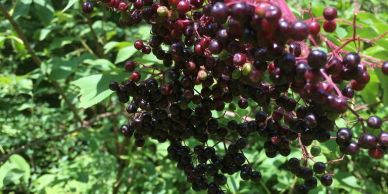
Native across all of Canada, the robust Canadian elderberry (Sambucus canadensis) thrives in USDA hardiness zones 3 through 9. It requires minimal maintenance, preferring full sun and consistently moist, well-drained soils. This fast-growing shrub reaches a mature size of 5 to 12 feet tall and wide. Ecologically, its thick, suckering roots prevent soil erosion and provide vital nesting habitats for songbirds. In early summer, its fragrant, creamy-white blossoms provide essential pollen for honeybees, native bees, and butterflies. By late summer, it produces drooping clusters of deep purple-to-black berries that yield a delightfully tart, earthy, and sweet flavor when cooked into jams, pies, or syrups. These ripe fruits are also a highly sought-after food source for over 50 species of birds.
💮 White umbels of flowers in June
🫐 Fruit in mid August - mid September
☀️ Full sun
💧 Moist, well-drained, fertile soil; pH of 5.5 - 6.5.
Chokecherry tree
Black Elderberry Tree
Eastern redbud tree
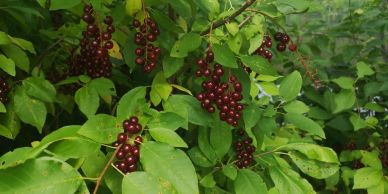
Native to North America, the chokecherry (Prunus virginiana) is a resilient, fast-growing shrub or small tree reaching 20 to 30 feet tall. Thriving in USDA hardiness zones 2 through 7, it adapts to diverse, well-draining soils and full sun. Its fragrant spring blossoms attract honeybees and butterflies, while the astringent, tart berries later feed birds and mammals. Furthermore, this invaluable ecological keystone anchors soils to prevent erosion and hosts hundreds of caterpillar species.
💮 Cylindrical racemes of white flowers in May
🫐 Fruit in August
🌤️ Fruits best in full sun, but adapts to partial or full shade
💧 Well-drained soil rich in organic matter; pH of 5.0 - 8.0.
Eastern redbud tree
Eastern redbud tree
Eastern redbud tree
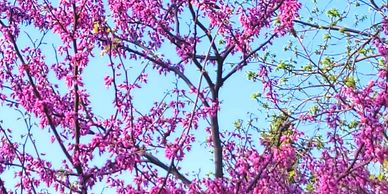
Transform your landscape with the Eastern Redbud ( Cercis canadensis), a stunning native tree ranging from Eastern North America to Southern Ontario. Thriving in USDA hardiness zones 4 to 9, it adapts to full sun or part shade and various soils, reaching a mature height of 20 to 30 feet. It offers crucial early-season nectar for bees and butterflies and is an essential host plant for species like Henry's Elfin butterfly.
💮 Small, bright magenta flowers in May
🌤️ Full sun to partial shade
💧 Consistently moist, well-drained soil; pH of 6.5 - 8.0.
Haskap berry bush
Eastern redbud tree
Haskap berry bush
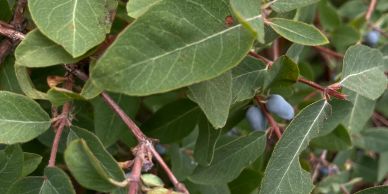
Native to the northern boreal forests of Asia, Europe, and Canada, haskap (Lonicera caerulea) is an incredibly resilient, 4- to 5-foot shrub thriving in Zones 1 to 7. Thriving in full sun and well-drained, organic-rich soil, it produces an early yield of dark blue berries with a unique sweet-tart flavor resembling a cross between a blueberry and raspberry. Beyond its fruit, it offers excellent ecological value by flowering very early, attracting early-season bumble bees and other essential pollinators. Image:
wildaz on iNaturalist under a Creative Commons license.
💮 Tubular blossoms of white flowers in May
🫐 Fruit in June
🌤️ Full sun to partial shade
💧 Well-drained loamy or sandy soil; pH of 5.5 - 8.0.
Blueberry bush
Eastern redbud tree
Haskap berry bush
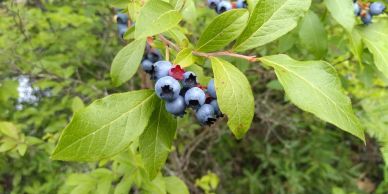
Native across North America, the blueberry (Vaccinium spp.) is a versatile, keystone ecological shrub that thrives in USDA hardiness zones 3–8. To achieve its maximum potential size of 1 to 8 feet depending on the variety, it requires acidic, well-drained soil and full sun. This plant provides immense ecological value, acting as a crucial nectar source for early-season pollinators like native bees and bumblebees, while its bell-shaped flowers and foliage host dozens of caterpillar species. Requiring cross-pollination for peak yields, this hardy grower rewards your garden with incredibly juicy, sweet, and antioxidant-rich fruit that is highly sought after by local wildlife and humans alike.
💮 Pale pink bell-shaped flowers in May
🫐 Fruit in August
☀️ Full sun
💧 Well-drained, high organic-matter soil; pH of 4.5 - 5.2.
Swamp milkweed
Summer Wine Ninebark
Summer Wine Ninebark
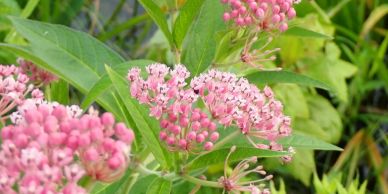
Elevate your pollinator garden with Swamp Milkweed (Asclepias incarnata). Native to most of North America, this clump-forming perennial thrives in USDA hardiness zones 3 to 9. It requires full to partial sun and moist, wet soils, though it adapts well to average gardens. Growing 3 to 5 feet tall, it provides unmatched ecological value as a critical monarch host plant and a rich nectar source, attracting butterflies, bees, and hummingbirds.
💮 Umbels of pink flowers in August
☀️ Full sun
💧 Moist, well-drained, hummus-rich soil, but adaptable to clay silt and loam; pH of 6.0 - 8.0.
Summer Wine Ninebark
Summer Wine Ninebark
Summer Wine Ninebark
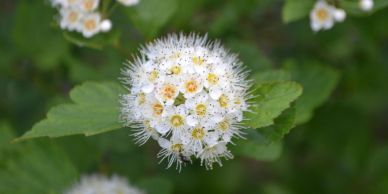
Native to eastern North America, the Summer Wine Ninebark (Physocarpus opulifolius) is a stunning, compact shrub (5–8 feet) that thrives in USDA Hardiness Zones 3-7. Thriving in full sun to partial shade and adaptable to most soils, it requires little maintenance. Its beautiful pink-and-white spring blooms provide vital ecological value by attracting pollinators like bees and butterflies.
💮 Corymbs of white flowers in May and June
🌤️ Full sun to partial shade
💧 Loamy, well-draining soil; pH of 4.5 to 6.5
Wild ginger
Summer Wine Ninebark
Wild ginger
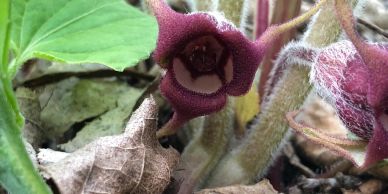
Native to the deciduous forests of eastern and central North America, Wild Ginger (Asarum canadense) is a resilient perennial that excels in shade gardens. Thriving in moist, humus-rich soil and partial to deep shade, it spreads slowly via rhizomes to form a dense, lush carpet of fuzzy, heart-shaped leaves. This native groundcover provides tremendous ecological value by controlling erosion on woodland floors and supporting local biodiversity.
💮 Unique maroon flowers bloom in April and May
🌳 Forest floor plant - partial to full shade
💧Rich, loamy, moist, well-drained soil; pH of 6.0 - 7.0.
Foam flower
We sell Many more native plants. Come see!
Wild ginger
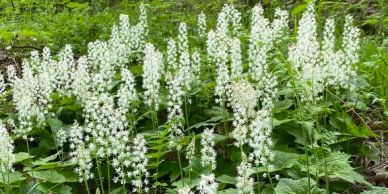
Native to the shaded woodlands of North America, foam flower (Tiarella cordifolia) is an exceptional perennial that brings vital ecological value by providing crucial habitat and attracting essential pollinators like bees and hoverflies. Perfect for your garden, its beautiful textured foliage and airy, frothy floral spires brighten dark, shady areas. This easy-care plant thrives in cool, humus-rich, and consistently moist soil when placed in partial to full shade, making it a stellar, weed-suppressing ground cover.
💮 Racemes of delicate white blooms in May - June
🌳 Forest floor plant- partial to full shade
💧Rich, loamy, consistently moist soil; pH of 5.5 - 6.5.
Black-eyed susan
We sell Many more native plants. Come see!
We sell Many more native plants. Come see!
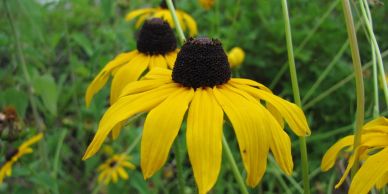
Elevate your garden with the Rudbeckia hirta, commonly known as the black-eyed susan. Native to the North American prairies and meadows, this hardy plant boasts exceptional ecological value by providing vital nectar for pollinators and attracting seed-eating birds. Celebrated for its bright, daisy-like golden blooms and dark central cones, it offers long-lasting summer color. Thriving in full sun and well-draining soil, this drought-tolerant beauty is incredibly low-maintenance, making it a perfect, resilient addition to any border or native plant garden.
💮 Sunflower-like blooms in early summer through the fall
☀️ Full sun
💧 Well-drained soil. Highly adaptable to sand, clay, or loam; pH of 6.0 - 7.0.
We sell Many more native plants. Come see!
We sell Many more native plants. Come see!
We sell Many more native plants. Come see!
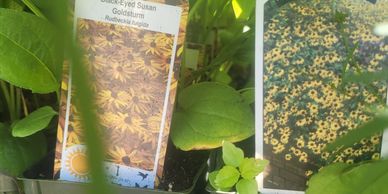
- Small native perennials are $4.50 each.
- 1 gallon native perennials are $12.50 each.
Including:
- Eechinacea (Coneflower)
- Jacob's ladder
- Black raspberry
- Prairie Blazing Star (Liatris pycnostachya)
- Brown-eyed Susan
- and many more...